

Cloudy pond water is one of the most frustrating problems pond owners face. One day your pond looks clean and healthy, and the next it turns murky, green, brown, or hazy. The good news is that cloudy pond water is usually fixable once you understand what is causing it.
Whether you have a koi pond, decorative backyard pond, or fountain, this guide explains how to clear cloudy pond water naturally and effectively. You will also learn how to prevent the problem from coming back.
What Causes Cloudy Pond Water?
Cloudy pond water is not always caused by a single issue. In most ponds, several factors work together to reduce water clarity.
The most common causes include:
-
Excess algae growth
-
Poor filtration
-
Fish waste buildup
-
Decaying leaves and debris
-
Low oxygen levels
-
Suspended dirt or clay particles
-
Overfeeding fish
-
Pond imbalance after heavy rain
-
Bacterial blooms in new ponds
Understanding the exact cause helps you choose the right solution instead of wasting time on temporary fixes.
Types of Cloudy Pond Water
Different colors and appearances can tell you what is happening inside your pond.
Green Cloudy Water
Green water is usually caused by floating algae blooms. Sunlight, warm temperatures, and excess nutrients allow microscopic algae to multiply rapidly.
This is one of the most common pond problems during spring and summer.
Brown or Tea Colored Water
Brown pond water often comes from:
-
Leaves breaking down
-
Organic debris
-
Tannins from wood or mulch
-
Dirt runoff after storms
White or Gray Cloudy Water
This type of cloudiness is commonly caused by bacterial blooms. It often happens in newly established ponds where beneficial bacteria are still stabilizing.
Murky Water with Floating Particles
If you can see debris floating around, your pond likely has poor filtration or disturbed sediment.
How to Clear Cloudy Pond Water Fast
The fastest way to clear pond water depends on the source of the problem. Below are proven steps that work for most ponds.
Remove Excess Algae
Algae is often the biggest reason pond water becomes cloudy.
Using a targeted pond algaecide can help control blooms quickly while protecting fish when used correctly. Products like CrystalClear® Algae D-Solv Pond Algae Control are designed for outdoor ponds containing koi and ornamental fish.
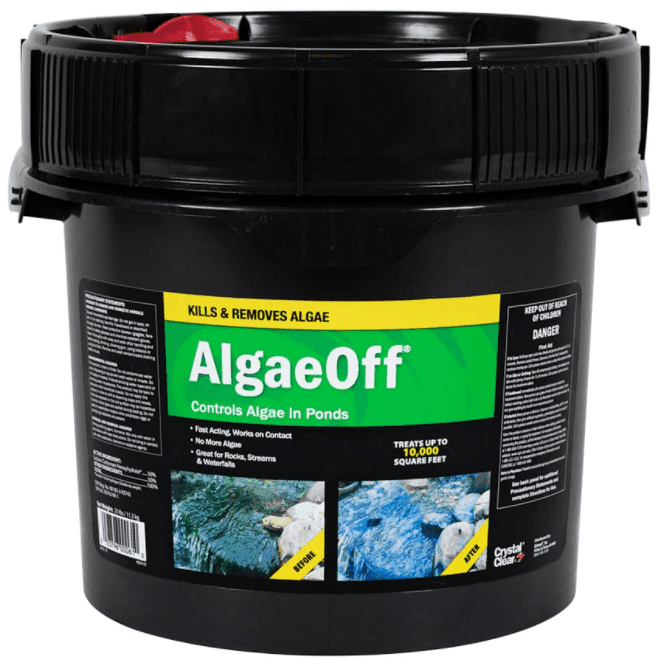
For larger algae treatment needs, many pond owners also use CrystalClear® AlgaeOff® Bucket to manage recurring algae growth in bigger systems.
You can also explore different treatment options through the pond algaecide collection depending on your pond size and algae type.
Signs Algae Is Causing Cloudiness
-
Water looks green
-
Pond walls feel slippery
-
String algae appears around rocks
-
Water gets worse during sunny weather
Improve Pond Filtration
A weak filter cannot remove fine debris and suspended particles effectively.
Your filtration system should match the size of your pond and fish load. If you have koi, you usually need stronger filtration because koi produce a large amount of waste.
Check These Filtration Issues
-
Dirty filter pads
-
Clogged pump intake
-
Undersized filter system
-
Poor water circulation
-
Lack of biological filtration
Cleaning your filter regularly without destroying beneficial bacteria is important. Use pond water instead of chlorinated tap water when rinsing filter media.
Add More Aeration
Oxygen plays a major role in water clarity. Low oxygen levels allow waste and sludge to build up faster.
Aeration improves:
-
Beneficial bacteria activity
-
Water circulation
-
Fish health
-
Breakdown of organic waste
Many pond owners use aeration systems and cleaners like Airmax® D-Scale™ Fountain Aeration Cleaner to help reduce buildup inside fountains and pond systems.
Benefits of Better Aeration
-
Reduces foul odors
-
Helps clear cloudy water naturally
-
Prevents stagnant areas
-
Supports healthy bacterial colonies
Remove Debris from the Pond
Leaves, fish waste, dead algae, and sludge all contribute to cloudy water.
Use a pond net or vacuum to remove:
-
Fallen leaves
-
Uneaten fish food
-
Dead plant matter
-
Sludge buildup
Organic waste releases nutrients into the water, which fuels algae growth and bacterial imbalances.
Avoid Overfeeding Fish
Many pond owners accidentally create water quality problems by feeding too much.
Fish food that is not eaten quickly sinks to the bottom and decomposes.
Good Feeding Practices
-
Feed only what fish eat within 2 to 3 minutes
-
Reduce feeding during cooler temperatures
-
Remove leftover food immediately
Less waste means clearer water.
Perform Partial Water Changes
A partial water change helps dilute excess nutrients and improve clarity.
Replace about 10% to 20% of pond water at a time. Avoid changing too much water at once because sudden shifts can stress fish and disrupt beneficial bacteria.
Always dechlorinate tap water before adding it to the pond.
Use Beneficial Bacteria
Beneficial bacteria help break down sludge and organic waste naturally.
They support a balanced pond ecosystem by reducing excess nutrients that feed algae.
Beneficial Bacteria Can Help With
-
Sludge reduction
-
Odor control
-
Water clarity
-
Organic waste breakdown
This is especially useful for ponds with heavy fish loads or accumulated debris.
How Long Does It Take to Clear Cloudy Pond Water?
The timeline depends on the severity of the problem.
Typical Timeframes
-
Minor cloudiness: 2 to 5 days
-
Green algae blooms: 1 to 2 weeks
-
Severe sludge buildup: several weeks
Ponds clear faster when multiple issues are addressed together instead of relying on one treatment alone.
Natural Ways to Prevent Cloudy Pond Water
Prevention is easier than constant cleanup.
Add Pond Plants
Aquatic plants compete with algae for nutrients and help shade the water.
Good options include:
-
Water lilies
-
Hornwort
-
Water lettuce
-
Floating hyacinths
Reduce Direct Sunlight
Too much sunlight encourages algae blooms.
Try adding:
-
Shade plants
-
Pond dye
-
Floating plants
-
Pergolas or partial covers
Maintain Proper Fish Stocking
Overcrowded ponds produce excess waste.
A pond with too many fish usually struggles to stay clear no matter how strong the filter is.
Clean the Pond Seasonally
Routine maintenance prevents debris buildup before it becomes a major issue.
Create a simple schedule for:
-
Skimming leaves
-
Cleaning filters
-
Vacuuming sludge
-
Checking pumps
-
Testing water quality
Common Mistakes That Keep Pond Water Cloudy
Many pond owners unknowingly make problems worse.
Cleaning Filters Too Aggressively
Killing beneficial bacteria resets your biological filtration.
Using Too Many Chemicals
Overtreating the pond can stress fish and create unstable water conditions.
Ignoring Sludge Buildup
Even clear-looking ponds may contain thick organic waste at the bottom.
Turning Off Aeration at Night
Oxygen levels naturally drop overnight, especially during hot weather.
When Cloudy Pond Water Is a Serious Problem
Sometimes cloudy water signals a larger issue.
Watch for these warning signs:
-
Fish gasping at the surface
-
Strong foul smell
-
Sudden fish deaths
-
Thick algae mats
-
Rapid water discoloration
These problems may indicate poor oxygen levels, ammonia spikes, or severe water imbalance.
Best Long-Term Strategy for Clear Pond Water
The clearest ponds usually follow the same formula:
-
Proper filtration
-
Controlled algae growth
-
Regular debris removal
-
Balanced fish population
-
Routine maintenance
There is no single magic solution. Healthy ponds stay clear because all systems work together.